

Slice of Sea wants you to point and click every inch of its hand-illustrated landscapes | PC Gamer - bardwellfread1948
Slicing of Sea wants you to taper off and click every inch of its hand-illustrated landscapes

I grew up playing degree-and-click adventures, cutting my teeth on Scomberomorus sierra's crushingly cruel quests before settling down with Lucasarts' more happy-go-lucky romps, but I would never consider myself an good at the writing style. Current adventure game Slice of Sea reminded me why: There are organic process branches of the adventure game that my brain is just not made for, and this game is a orchestrate descendant of a particularly demanding and thorny lineage.
Slice of Sea is the latest hand-painted puzzle adventure from prolific comic author and independent developer Mateusz Skutnik, WHO's been releasing games since the Flare epoch. Nearly notability are the thirteen adventures in his Submachine series and the eight Daymare Town games. These escape board-esque adventures were defined by their detached and alone vibraphone. Aside from the infrequent scrawled note and item name to nudge players in the right direction, progress came strictly through poking and prodding at strange devices across doubled screens, intuiting their connections and purpose. There were none cruel and emergent deaths to suffer, but progress required your intuition to dress with the developer's captive.
Piece of Sea at first appears to follow contrastive. Players master Seaweed, a little Oceanic gremlin piloting a pair of Richard Horatio Edgar Wallace & Gromit-esque techno-trousers. Using the arrow keys (or WASD) you can steer them through a beautiful watercolour world connected a silently-told pilgrimage to give to the sea. Seaweed fire't do much aside themselves, so it's equal to you to click on the world to interact with its umteen objects and machines.
The biggest curve in Slice of Sea's point-and-click adventuring is that despite having a case on-screen and an inventory of items, there's no corporeal restrictions on what you can interact with. Seaweed standing connected one tilt pillar and an item you need sitting on another, nowhere within reach? Doesn't matter. Click and the item hardly water chickweed into your inventory, ready to use anywhere.
Much same in the Submachine games, you are a disembodied presence, interacting with the human race one click at a time. By from having to stand firm happening the occasional pressure sensor, Seaweed is just on for the ride as you clear their path.
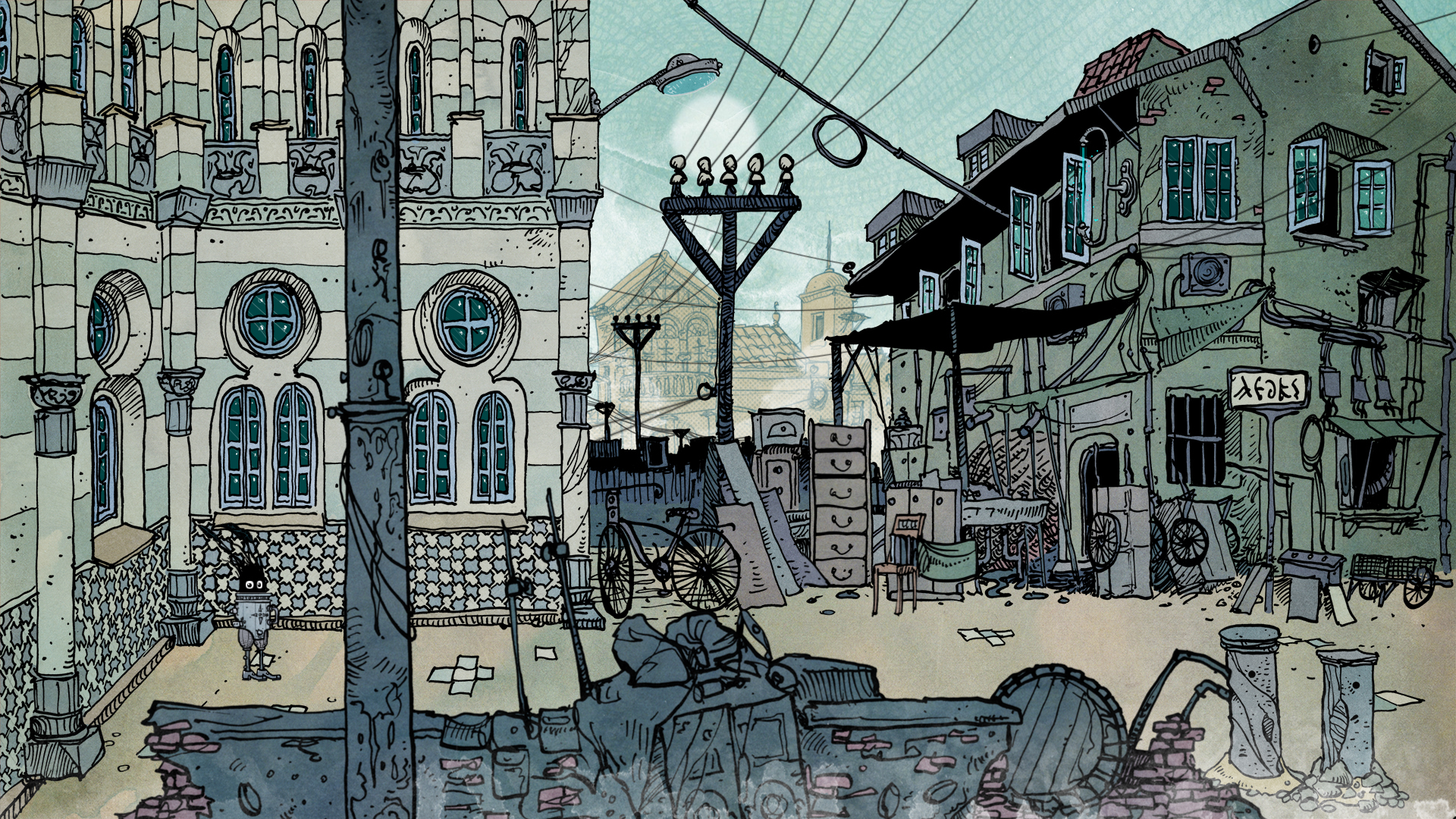
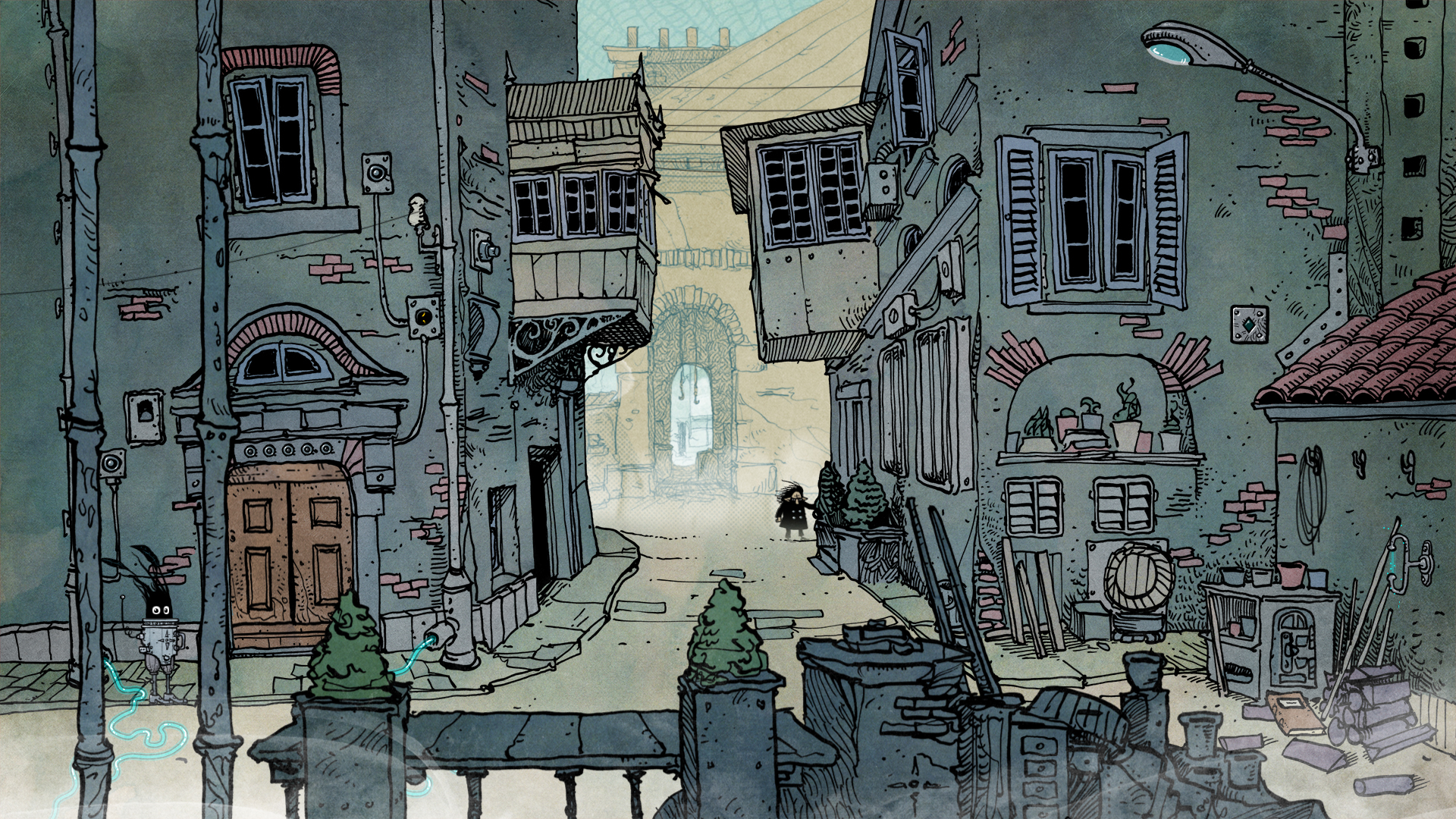
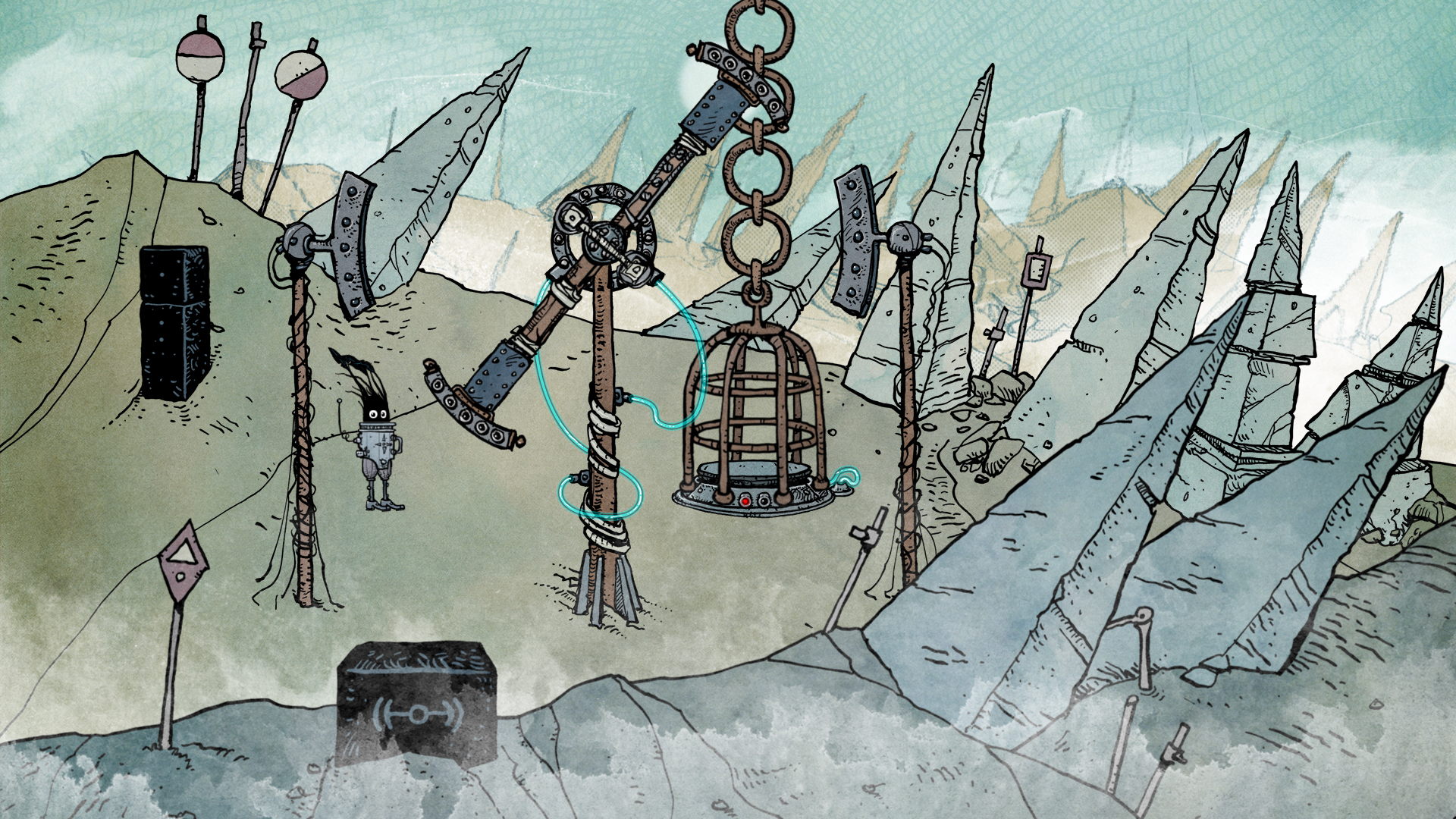
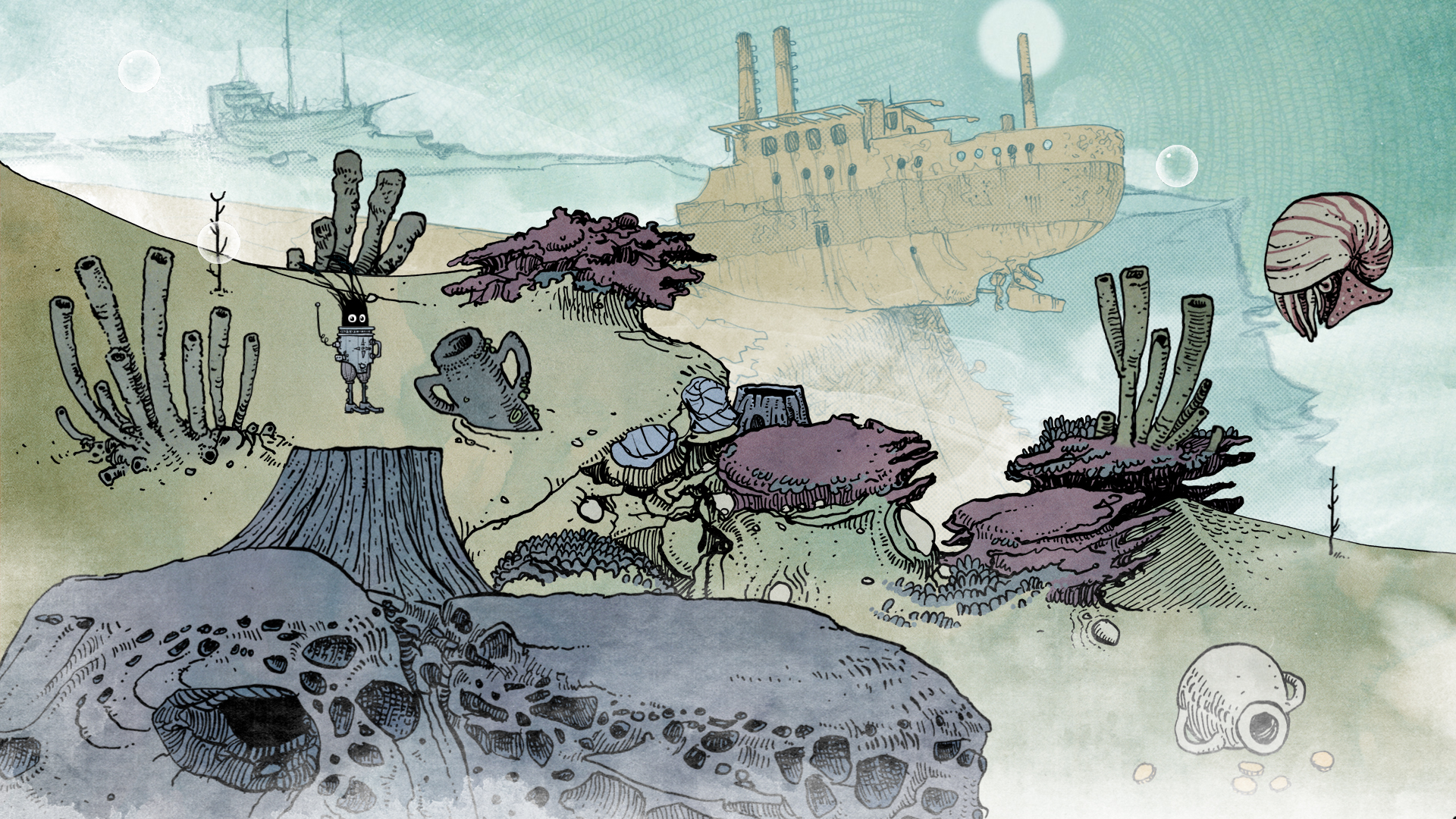
What a lovely track it is, too. A softly shady and beautifully illustrated set of scenes, the world of Slice of Sea is fragmented and crumbling, dusty and desolate but non abandoned. In that respect are pockets of civilization and strange people of more species seemingly disinterested in an walk frond of sea flora bounding past, A if this is conscionable a daily occurrence. A seemingly sealed off train automobile half-buried low a dune might contain a passenger engrossed in a record book, nonplused at your reaching. At that place's this constant sense that this world—its very Torah of physics fraying at the edges—is just doing its own thing A you pass direct to somewhere else.
If the intent is for the player to linger on for each one screen and fully absorb what they see, then it's reinforced—or forced, really—away constant, repetitive pel-hunting. Interactable buttons and objects are often scarcely a dusting of pixels all-inclusive, even on my solid curved monitor. Optional collectibles (for achievements, mostly) are even more hidden, ofttimes appearance camouflaged on distant foreground or background items. I frequently set up myself sweeping my cursor back and forth, looking for information technology to alteration mold for a moment, indicating that I'd fleecy something utile.
Even with steady progress and the occasional peek at a video walkthrough, Slice of Sea took me a whole day to finish, and if I'd not had someone else's notes to crib from it would have stolen far longer. My brain was scream for a jot; a line of dialogue to recount Maine what is Oregon ISN't working or just a button to highlighting interactable objects and room exits. And yet if Slice of Sea one-handed me any of those things it would lose its identity A a descendant of the Submachine and Daymare Town games. It would no longer be part of the legacy of Wink adventure play. It would no yearner be Slice of Sea.
While Seaweed's journey was more of an acclivitous struggle than I'd expected, I still enjoyed my time with Slice of Sea, even if I did cause to turn to others for assistance. Its world is sumptuous and every new screen is a lushly illustrated process—an intrinsic reward for onward motion. All complaint I could level at it could be considered a positive by fans of Skutnik's earlier works.


I indirect request I'd enjoyed it as much atomic number 3 I think they will. This is a treat for people World Health Organization spent hours patiently puzzling their right smart through the Submachine series, with detail-oriented minds and eagle-sharp eyes.
As frustrating as my experience with it sometimes was, Slice of Sea really is a treat for the eyes and ears. Seaweed's escapade took Pine Tree State on a tour of a strange and fascinating twilight world, crumbling to dust only still chockablock of life. It was also a reminder that the point-and-click adventure genre is a large, more varied place now than always, filled with interesting mutations in game designing. If you've the patience for it, wear't mind a little pixel-hunting and (ideally) cut your teeth on the unforgiving Flash era of lam rooms, Slice of Shipboard is easy to recommend, and it's out nowadays on Itch.io and Steam for $24.99/£19.49.
But if like me you saved solacement in Lucasarts' easygoing puzzle design, mayhap pass on this set off to the beach. Some sandcastles are best observed from a distance.

Source: https://www.pcgamer.com/slice-of-sea-wants-you-to-point-and-click-every-inch-of-its-hand-illustrated-landscapes/
Posted by: bardwellfread1948.blogspot.com
0 Response to "Slice of Sea wants you to point and click every inch of its hand-illustrated landscapes | PC Gamer - bardwellfread1948"
Post a Comment