

Razer Phone 2 hands-on: The first gaming phone gets better - bardwellfread1948
It was only last year that Razer finalized its buy up of Nextbit and quickly released the Razer Phone—the international's first gaming-centric smartphone. This year's Razer Phone 2 maintains its concentrate on the single contrive speech communication and hardcore internals we loved, while refining key weaknesses and adding RGB for maximum 'tude. My colleague Gordon Mah Ung and I got some manpower-on time with the Razer Phone 2 a couple on of weeks before launch—and even though it looks similar to last year's adaptation, it's been reworked from the interior out.
Razer Speech sound 2 specs and features
Announced Wednesday, the Razer Sound 2 will constitute priced at $800 and will be available for pre-order soon. Below are the main Razer Telephone set 2 specs (look for camera specs later in the story):
- Processor: Qualcomm Snapdragon 845 (2.8GHz)
- System retentiveness: 8GB (LPDDR4X)
- Storage: Internal – 64GB V4 UFS / External SIM + micro SD slot (adequate to 2TB)
- Display: 5.72-edge in IGZO LCD 1440×2560
- 120Hz, Widely Color Gamut
- UltraMotion Technology
- Corning Gorilla Glass 5
- 645 nits (typ.) 470 nits (min.)
- Power: 4000 mAh Atomic number 3-Po battery
- Qualcomm QuickCharge 4.0+
- Radiocommunication Chi inductive fast charging
- Size up: 158.5 x 78.99 x 8.5 millimeter
 Adam Patrick Murray/IDG
 RGB: A new trend in phones??
Mixed feelings about the glass in back
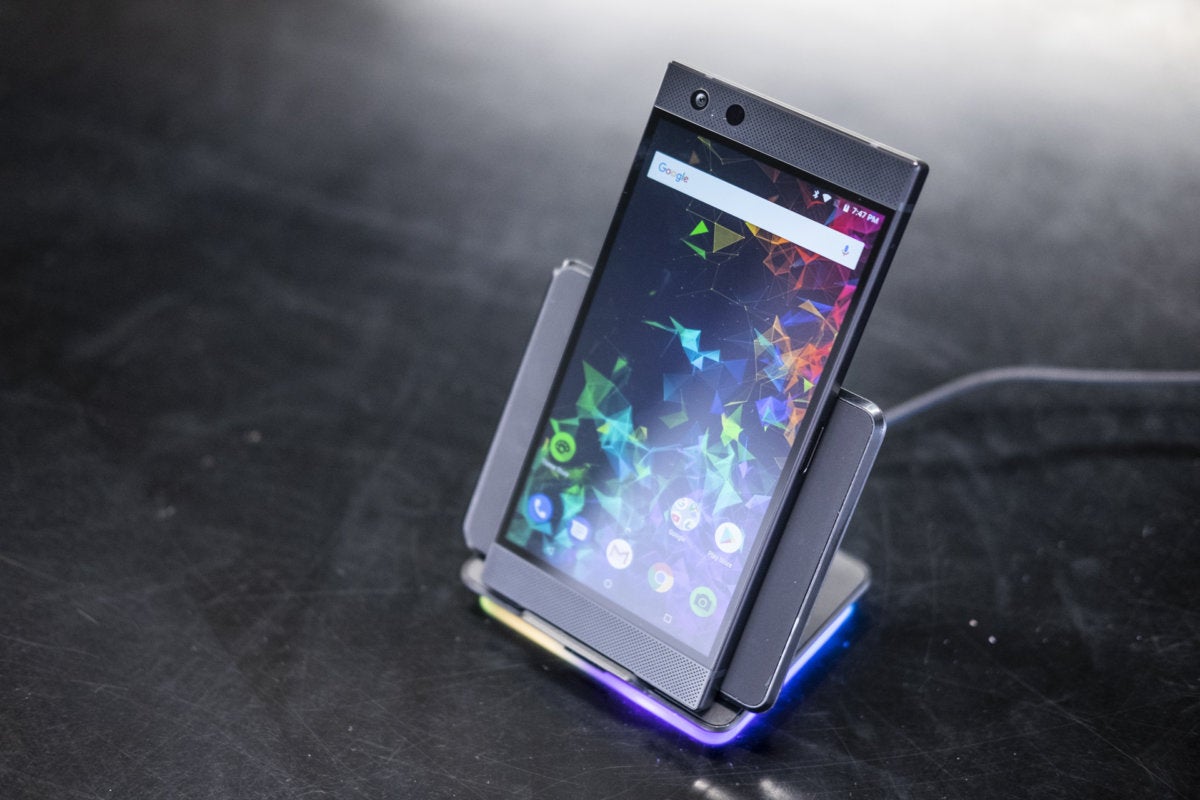
I North Korean won't lie, I'm pretty bummed by the move from a brushed-aluminum back on the first Razer Telephone set to a glass one. But there are some upsides. First off, the Razer Phone 2 now includes Qi wireless charging for its 4000mAh barrage fire (same size every bit last year). This is a convenience that likewise allows Razer to sell a new radio charging dock that's rough with RGB lighting in the base. Unfortunately the docking facility doesn't sync up to Razer Synapse or Chroma studio on the PC.
 X Saint Patrick Murray River/IDG
 Need more RGB? Drive the Qi radio set charging dock!
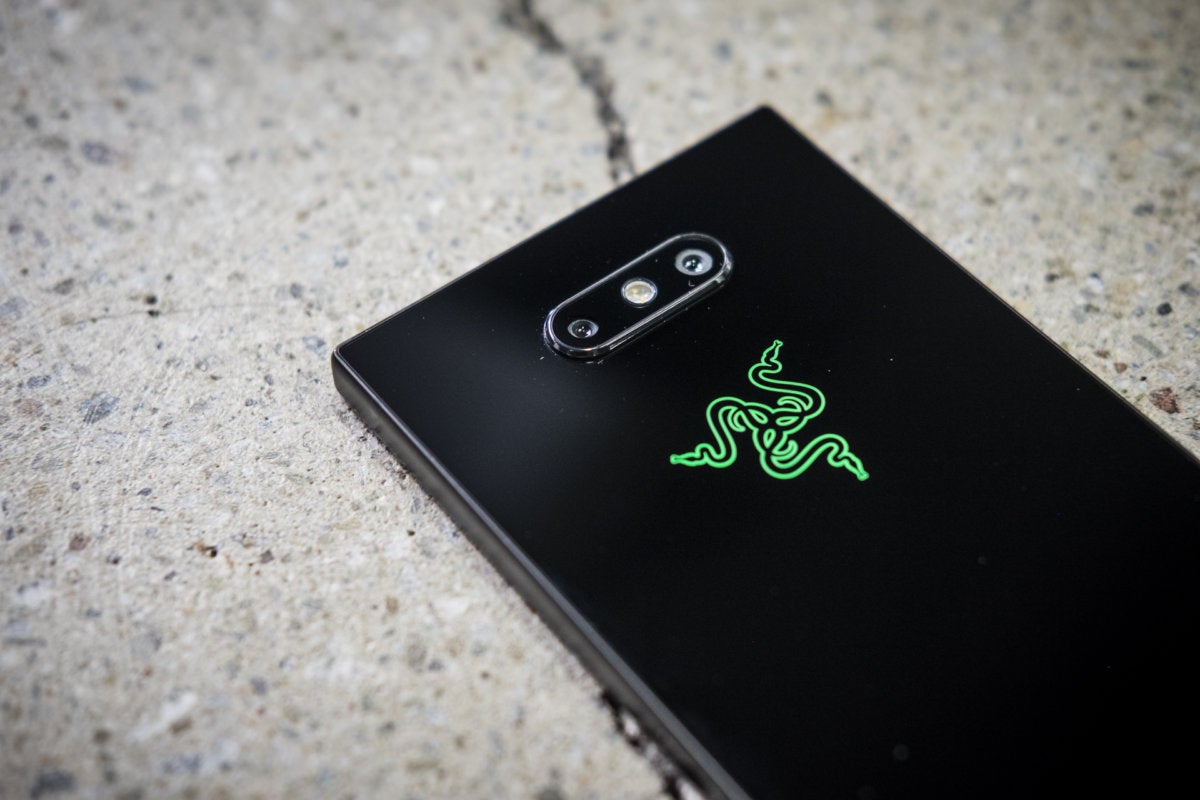
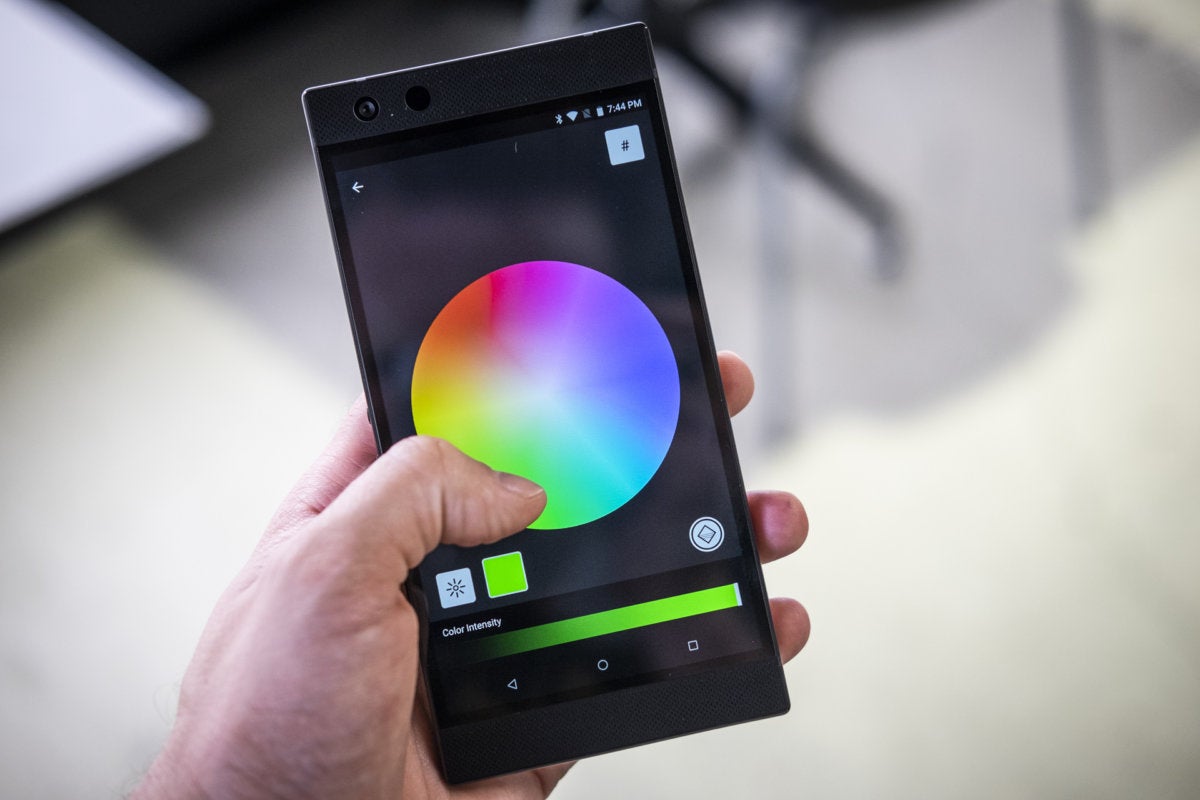
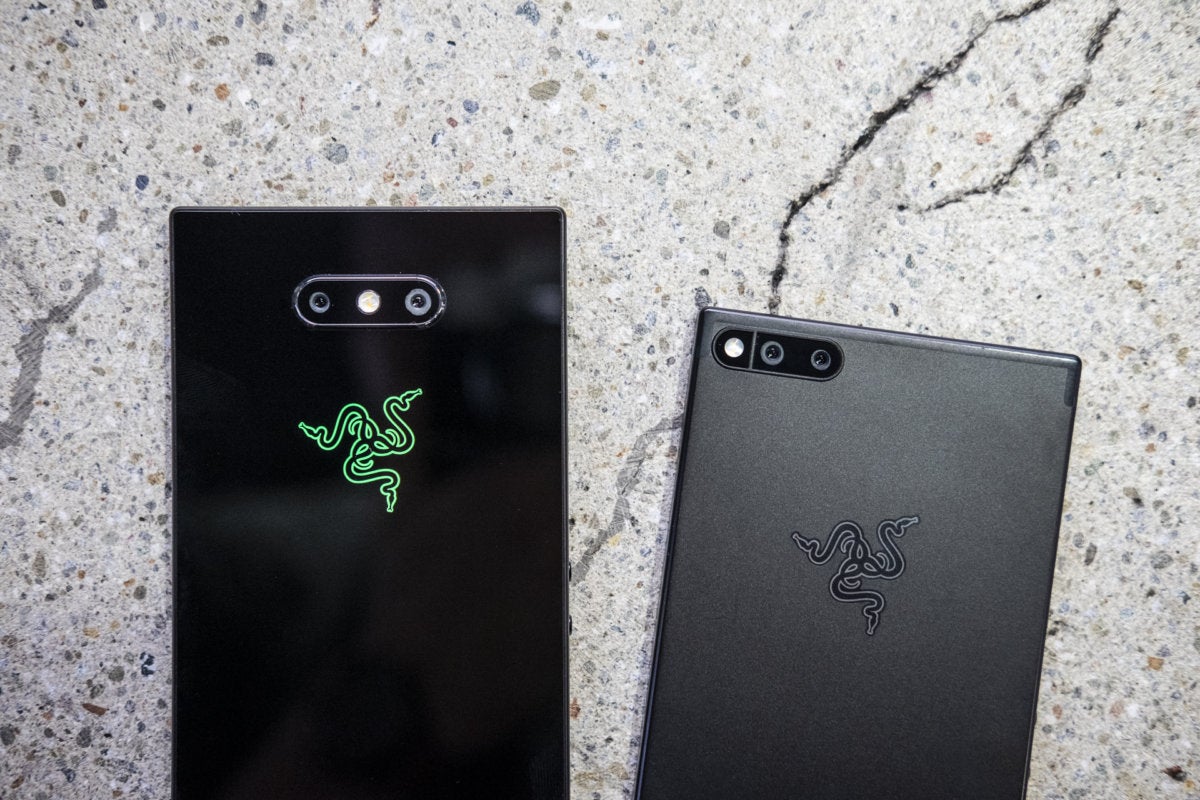
Speaking of RGB, Razer's triple-headed snake logotype on the back of the Razer Phone 2 nowadays lights up. The burden is controlled by the Chroma app, and has the representative RGB lighting features like breathing and spectrum—alongside the atmospherics alternative. The logotype bequeath also light up for notifications if you choose, and has a brightness slider to control the gleam.
 X Patrick Murray/IDG
 Razer Chroma controls your RGB desires.
Even though the glass back does allow these features and more than to follow placed in the Razer Telephone 2, I still prefer an metal phone. The previous model felt ilk IT could hold some grievous depreciation over metre without a case. The glass will have a destructive effect on temperature control besides, which has been reworked with this iteration.
Vapor chamber
Gordon grilled Razer over the red-hot temperature reduction invention in the Razer Phone 2, and his first impressions are affirmative. To deal with the increased hot up, Razer said it switched from heat pipes to a full vapor chamber design almost atomic number 3 rhetorical as the rearward of the phone. Wish heat pipes, the vapor chamber helps wick fire u from the Snapdragon 845 and disperses information technology over a larger surface field in the phone, which should, in possibility, better aid in dissipation.
The vapor chamber, Razer claims, helps the Razer Phone 2 maintain clock speeds and frame rates most other phones can't, due to heat buildup in long gaming sessions. The only other phone that we know of to feature a vapor sleeping room is the Asus ROG Phone, also aimed at gamers. The ROG Phone's "3D vapor-chamber" seems to be somewhat smaller than the blueprint Razer picked, but it does combine several layers. Razer is claiming a 20-percent to 30-percent melioration over last year's phone equipped with a Snapdragon 835. We'll have to hold back for reviews to evaluator how effective the cooling is.
 Adam Patrick Murray/IDG
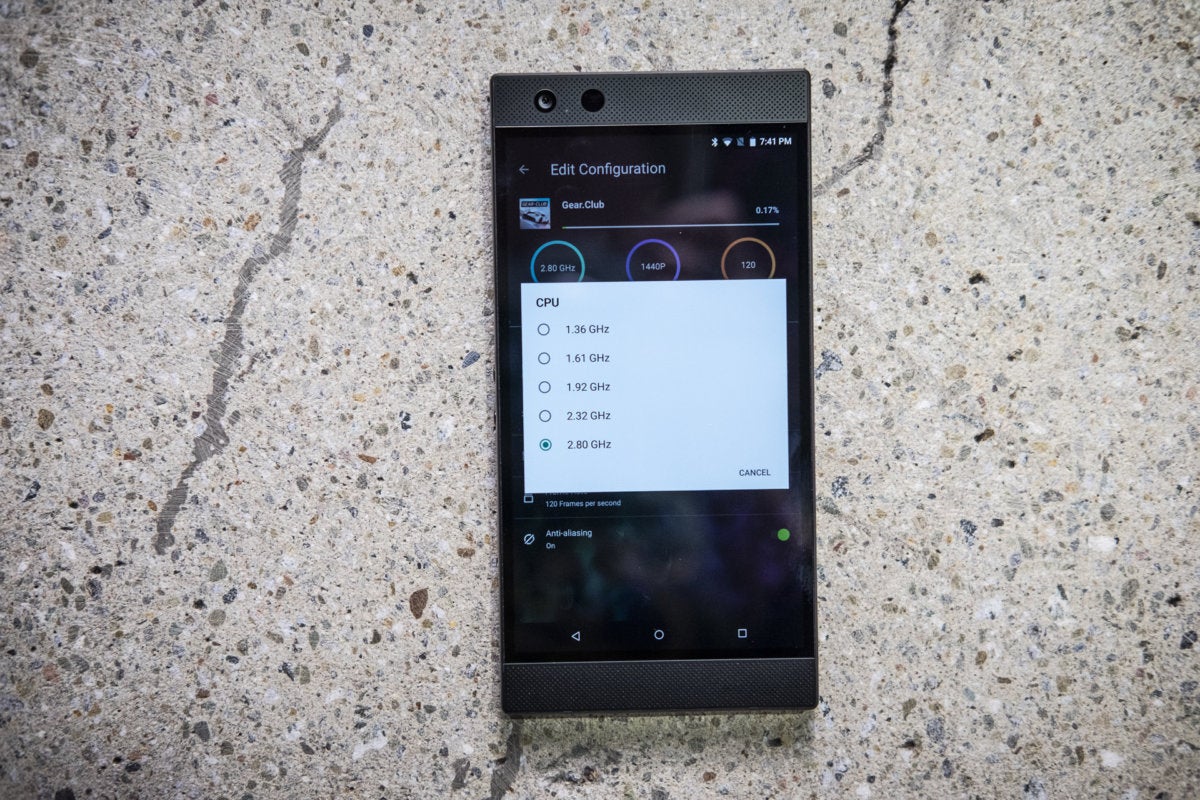
 Selectable time speeds on a phone. Not every bit water-cooled as RGB—just still very cool.
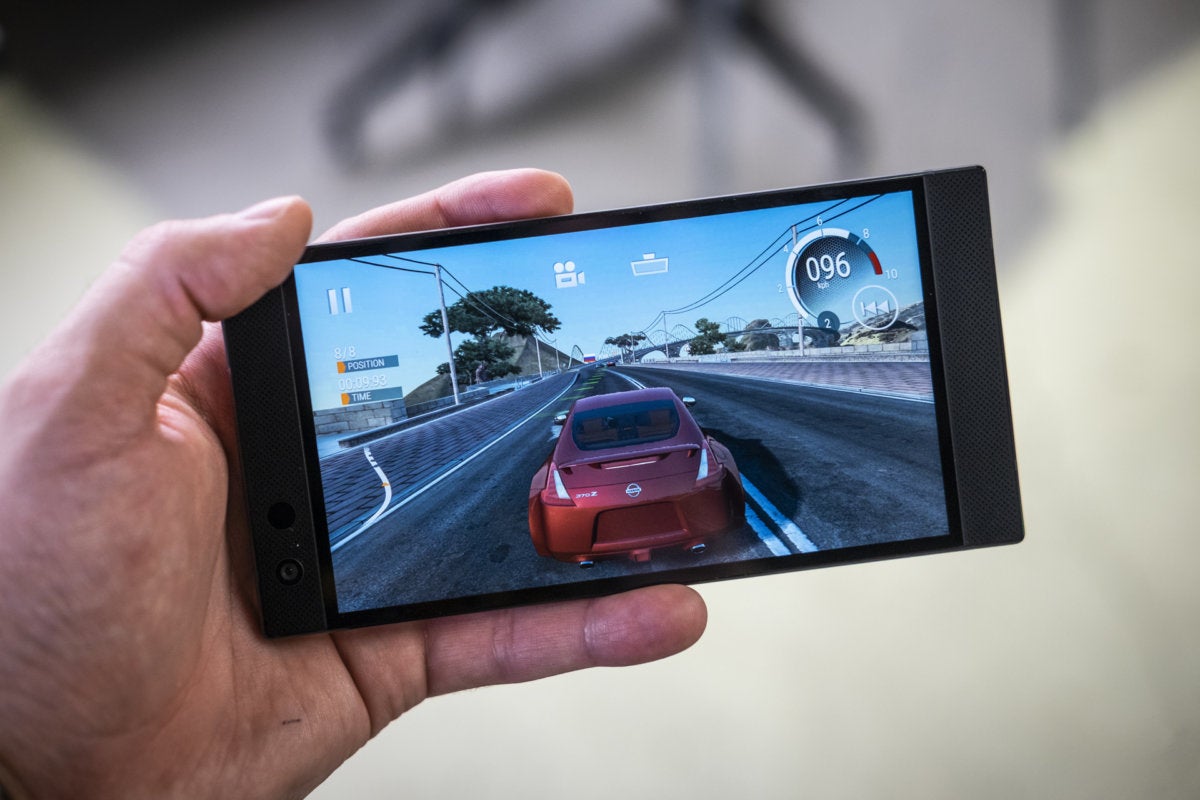
In the virgin Razer Cortex app you'll find a list of games installed on the device, each with its own custom settings—like the Plot Booster app on the archetypical Razer Headphone. Unequal most game launchers installed on Android phones, you can melodic line from each one gritty to run the way you'd like, with discrete toggles for Central processor time speeds, screen out resolution, border rate, and anti-aliasing. When information technology's non worth digging that deep into each game to set so much configurations, you can use preset sliders on either a per-game basis, or on the phone arsenic a whole.
 Adam Patrick Murray River/IDG
 (Not pictured is the RGB lighting that makes this game run so fast.)
As Thomas More gaming-oriented phones hit the market, I've yet to see any translate a more desktop-like feel for to your air pocket. Settled along last class's model, Razer knows how to focus on its key demographic without bogging down the rest of the phone. Gambling focus aside, all the same, this phone placid needs to operate well in 24-hour interval-to-day usage, and we'll be sure to test that.
Aggressive specs at a unfluctuating monetary value
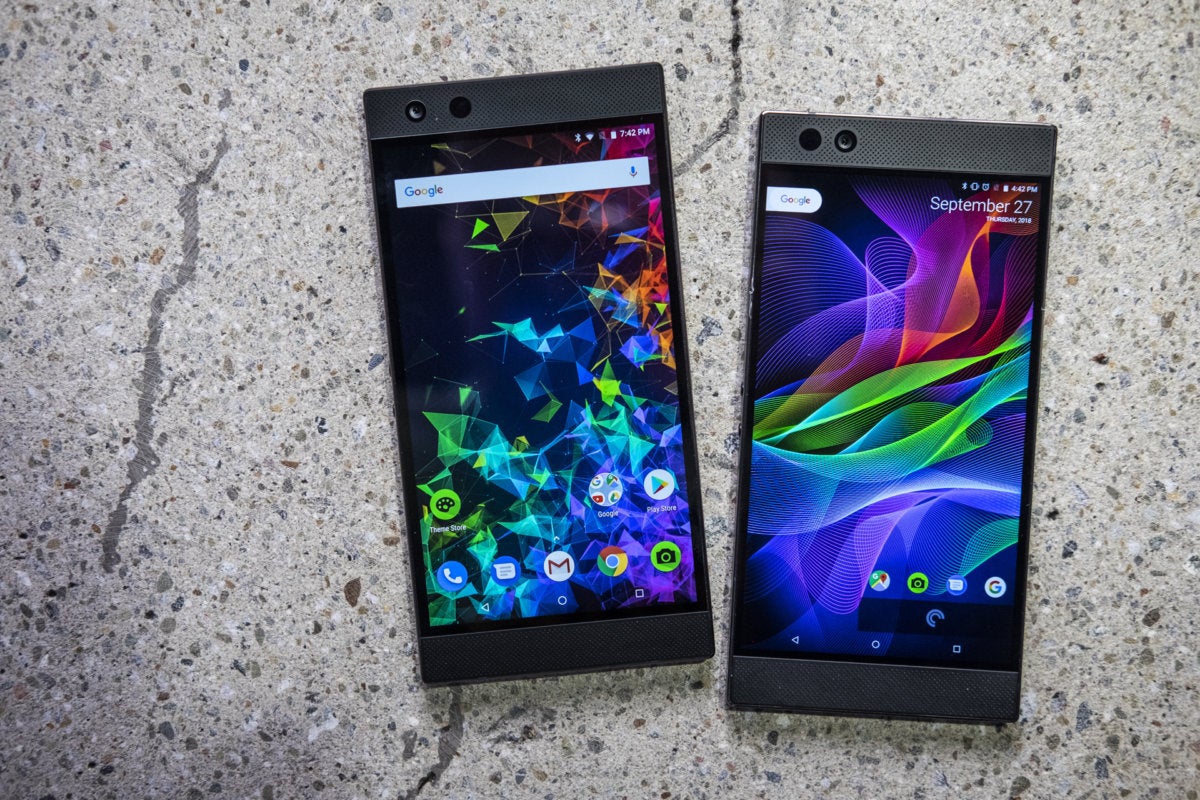
I was surprised last year by the high $800 price shred of the first Razer Phone, but am flat more surprised this year that Razer is sticking to that price for the Razer Phone 2—considering the trend upward from the industry A a gross. Connected top of an already buttery-smooth 120Hz sieve that's brighter and more vibrant than last year's, the Razer Call 2 has brought even up more punch to the speakers. Information technology was hard to compare without acquiring more time with the phone, but the brief experience was impressive.
 Cristal Patrick Murray/IDG
 Razer Phone 2 (left) following to the Razer Phone 1. The Razer Phone 1 wishes it had RGB lighting.
Inject the fact that the Razer Phone 2 now is rated for IP67 dust and pee protection, and it continues to live a flagship phone that contends with the best of them.
Improved camera
One of my main areas of focus here at PCWorld is on smartphone camera testing (check away Last Cam Standing), and I was very discomfited by the photo taking experience connected the first Razer Phone. Even though the photographic camera improved over meter through software updates, it was still the weakest head in what was otherwise a powerhouse.
 Adam Patrick Murray/IDG
 The camera lens has been shifted toward the center, about the RGB logotype.
For the Razer Call 2, Razer has switched from Samsung to Sony IMX sensors for the dual-camera module and added OIS (optic image stabilization) to the main lens. Below are the camera spectacles:
- Rear cameras
- 12MP f/1.75 main with OIS (optical image stabilization)
- 12MP f/2.6 telephoto without OIS
- Dual PDAF (phase detection autofocus)
- Video 2160p@60fps, 1080p@120fps, stereoscopic picture sound recording
- Front camera
- 8MP f/2.0
- Video 1080p@60fps
Razer was real aware of the shortcomings of the camera system in the first Razer Phone, and secure some major improvements in the continuation. During my manpower-on I didn't flummox enough time with the television camera to say cardinal way or the former, but I'll include the deep testing in the review.
Testing incoming
We'll make up following up with testing of the Razer Phone 2 and a review. As this is a phone focused along gaming, we'll admit comparisions to other gaming phones so much as the ROG Call up and Honor Play.
 Adam Patrick Murray/IDG
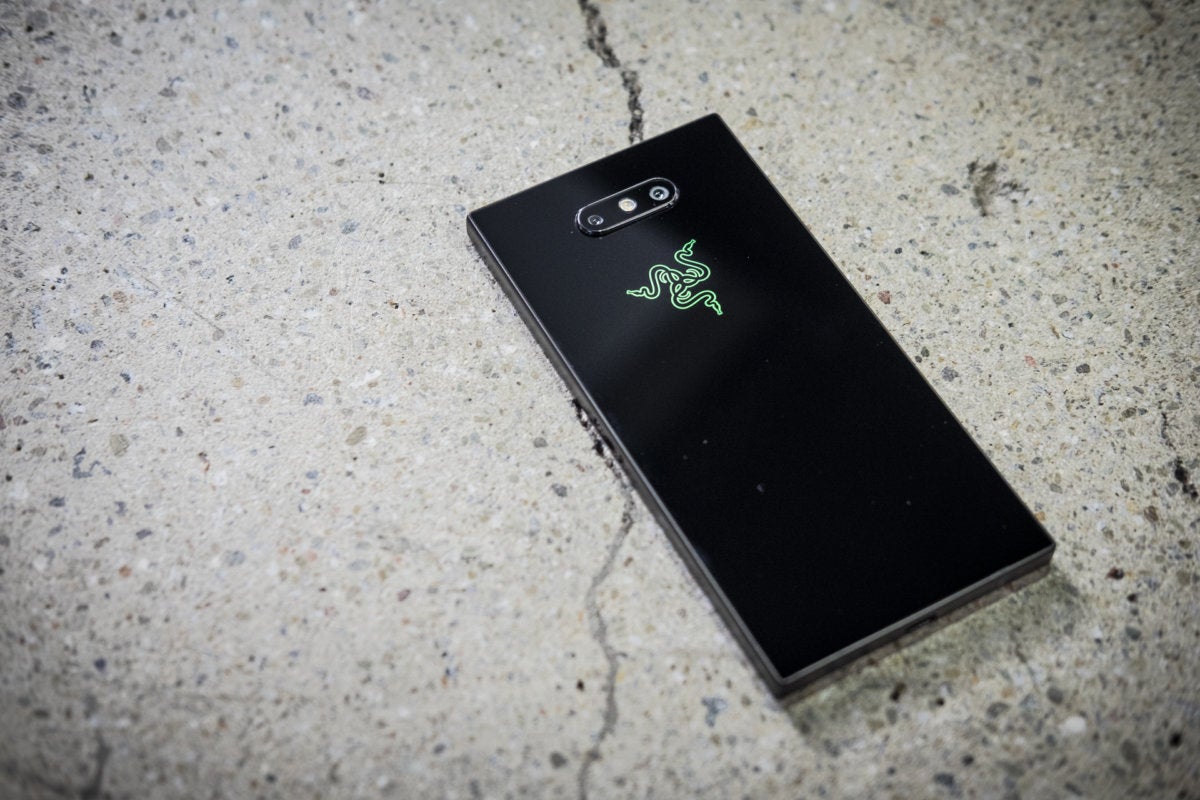
 Good on Razer for bucking the trend of uphill smartphone costs! And oh yea, RGB.
Source: https://www.pcworld.com/article/402667/razer-phone-2-hands-on.html
Posted by: bardwellfread1948.blogspot.com
0 Response to "Razer Phone 2 hands-on: The first gaming phone gets better - bardwellfread1948"
Post a Comment